
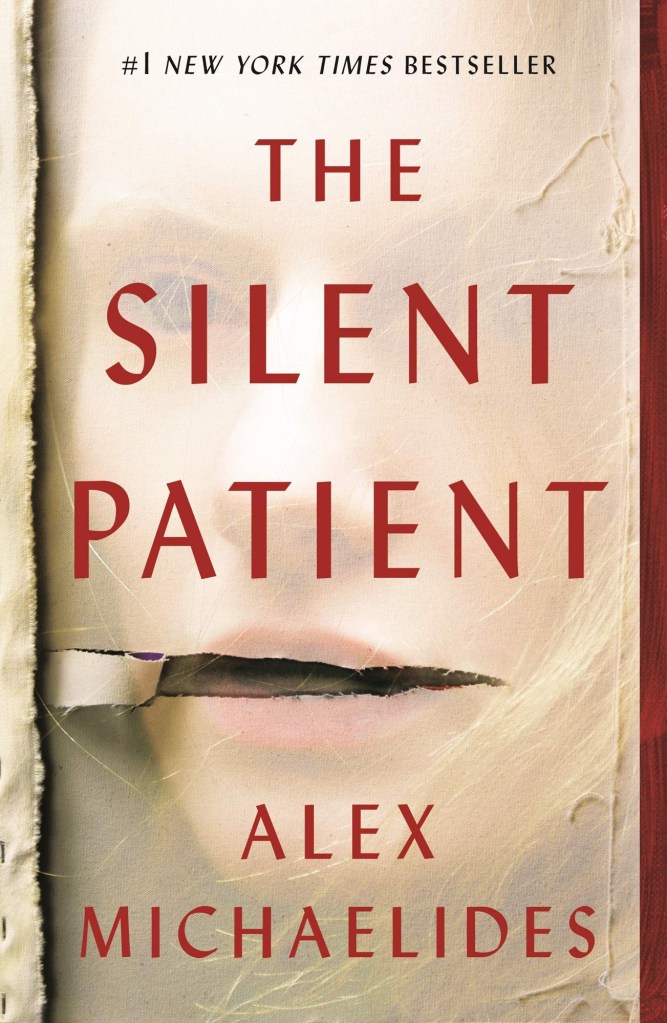
From my Goodreads review. I first read The Silent Patient by Alex Michaelides in 2019, when I was medicated half to death on Risperdal and still believed psychiatry’s promise of “care.”
Six years later, as I reread my own words from psychiatric confinement at the Montreal General Hospital — the irony was not lost on me that I’m now the patient who refuses to stay silent about familial and systemic abuse, “exhibiting tangential thoughts and pressured speech,” as they note in their files to justify forced injections.
Originally completed April 7, 2019. Addendum (in italics) written October 30, 2025, from inside confinement.
Really enjoyed this novel and couldn’t put it down. (in 2019 I was medicated half to death on Risperdal at the time of writing this, which is an antipsychotic and now, six years later, finding myself confined in a disgusting psychiatric ward under false suicidality claims, I’d still rather read this than most of the case notes being written about me.)
I suppose I should have guessed what the big reveal was, but I was too happy to just go along with the story and not try to guess what was around the next corner — besides which, a debilitating migraine kept my mental faculties from being fully operational. (Some things don’t change: migraines then, migraines now, though psychiatry will insist that antipsychotics are somehow supposed to “resolve” the migraines, which are often considered to be comorbid with bipolar disorder. They don’t, and I’ve been arguing for years that I need to be evaluated for complex post traumatic disorder, or CPTSD — which is also a frequent cause for migraines and autism spectrum, which presents very differently for high functioning females.)
This is not to say this book is for dummies. It is well and intelligently written, but also doesn’t require the reader to bend their mind into strange configurations to understand what is being said. A blessing for a frequent migraine sufferer like me. /end PSA
(Still a blessing for anyone forced into psychiatric jargon that bends language into submission — such as “grandiose delusions of being highly intelligent where a simple “is an intellectual”, as a male nurse said, would do.)
A psychiatrist is passionate about trying to help a patient who hasn’t spoken a word since shooting her husband point blank five times in the face, then botching an attempt to kill herself. As the story unfolds, the narrator, Theo Faber, reveals details about his own traumatizing childhood and the psychological repercussions in his married life, which make him feel a connection to his patient and the quite often true fact that most mental health professionals are themselves working through serious trauma. (2025 footnote: Exhibit A — my own current psychiatrist, Dr. Z, who seems to be working out his control issues via so-called “care”, which somehow includes fabricating a narrative that frames me as detached from reality with inventions such as “has told me she believes she’s immortal” when I never so much as implied such nonsense.)
I suppose part of the attraction for me was that the story took place in a psychiatric institution and that the patient accused of murder is a painter. Two things I’m familiar with. I’ll leave you to guess which two. (That sentence is now blackly comic. I wrote it as a joke; now it reads like evidence.)
Short, two-page chapters keep the pace moving along swiftly. A satisfying psychological thriller and quite a great debut for Michaelides if you enjoy the genre. My friends who aren’t fans of mysteries or thriller didn’t enjoy this one, which isn’t at all surprising. This book delivers for fans of Hitchcock movies and reading as entertainment.
(Rereading in 2025, the “institution” setting now feels less like a backdrop and more like documentation. The psychiatrist in the novel confuses control with care; my own psychiatrist confuses control and “kindness” — expressed with frequent smiles AS HE SHUTS DOWN CONVERSATIONS and also had the gall to say to a Superior Court Judge yesterday I fell I know Ms. Shamir very well” and that we have a great relationship because we watched the solar eclipse together from the Allan Memorial Institute together… with ethics. Both pretend understanding while erasing individuality. The difference is that one is fiction — and the other files for court-ordered forced injections to perform temporary chemical lobotomy.)
(In 2019, I called The Silent Patient a “satisfying psychological thriller.” In 2025, I call it a story that hits close to home — the major difference being the patient in the novel has committed murder, while my threats are to sue these so-called mental health care professionals and make them lose their licenses.)
Read my recent blog post: Making a Case Against Chemical Lobotomy and Witness Tampering — which includes a link to some of my memoir chapters.


 Totally Surreal
Leave a reply to maxfrancesartist Cancel reply