
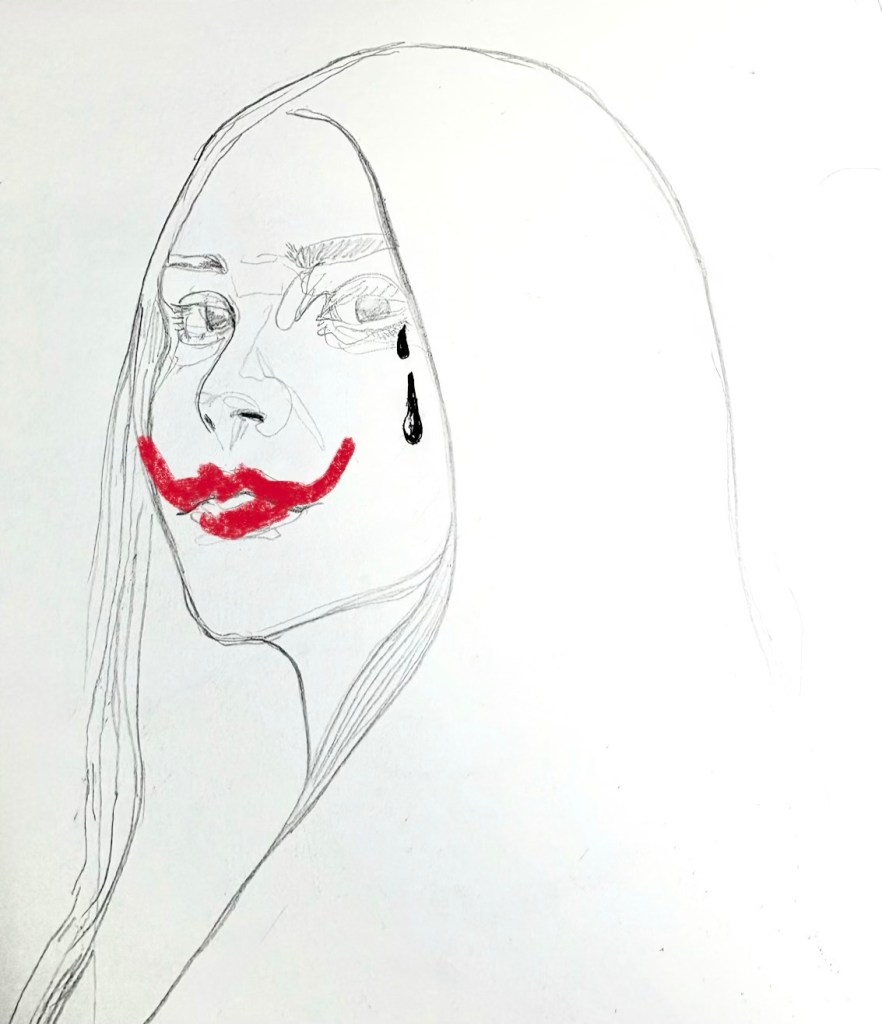
Toxic positivity is someone grabbing at your chin when you’re crying over the loss of a beloved person or pet and saying “smile, everything will get better if you look on the bright side.”
There’s a threshold where something stops being harmless “uplift” and becomes constant saccharine noise that dulls your perception and clutters your feed with forced emotional cues.
Six reasons why toxic positivity is problematic:
1. It denies reality.
2. It protects abusers and negligent systems.
3. It’s infantilizing.
4. It silences righteous anger.
5. It collapses nuance.
6. It makes the sufferer responsible for the harm done to them.
Once you notice it, you can’t un-notice it — which is why I am now actively unfollowing social media accounts that force-feed me these “smile and the world will smile at you” nonsense posts. They are everywhere, and I’ve had enough of this nonsense pop psychology cluttering up my life as I fight for my right to bodily autonomy in an age where Big Pharma practically has cult status, with doctors and nurses and everyone in the mental health professions insisting that somehow thinking about abuse is the problem and that wanting to call out abusers is, in and of itself a sign of mental illness.
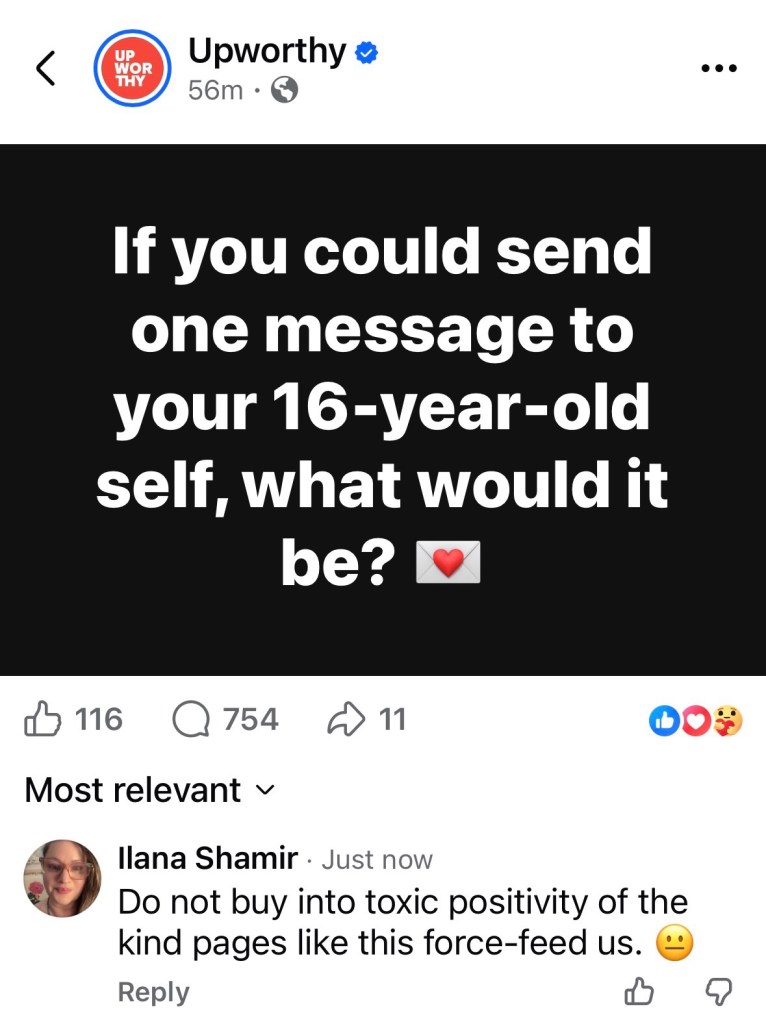
A page like ‘Upworthy’, which I recently unfollowed is a perfect example as a blueprint for institutionalised toxic positivity.
The whole brand is built on “feel-good virality” at all costs, which inevitably produces:
• Denial of reality
Everything is reframed as wholesome, adorable, inspirational — even when the underlying topic is complex or painful.
• Emotional coercion
You’re nudged to feel good, be uplifted, find the moral, learn the lesson, regardless of context.
(“Here’s a kitten, stop thinking about systemic collapse.”)
• Infantilisation
The tone assumes the audience is fragile or simple-minded and must be spoon-fed curated sweetness.
• Algorithmic optimisation over truth
They don’t publish nuance — they publish shareable dopamine hits.
That’s textbook “collapse of nuance,” which I outlined in point #5.
• Aesthetic happy-washing
Even tragedies often get reframed into “hopeful” stories.
It’s the equivalent of slapping a pastel sticker over a structural crack.
Or, painting on a smile over a drawing I did of of a grief-stricken woman in the months leading up to the death of my friend of 30 years, followed by the loss of my father to a freak accident and my mother’s abandoned in the months following those losses.
I had a serious discussion this week with my treating psychiatrist who evidently thinks a presentation pad is a proper stand-in for his complete lack of empathy and nonexistent listening skills. One of the things I said to him was that a giant red flag was raised for me whenever I told him I was severely depressed because I was grieving very important losses a few years ago and his immediate suggestion was that I might want to try electroshock therapy. I simply could not believe that he considered zapping away normal and healthy grief and sadness — however severe — with a treatment that harsh, one designed to override memories.
That told me everything was wrong with his way of understanding what a grieving process can do to maintain a healthy psyche. I am currently in the process of building an ombudsman’s file to present to the medical examiner because
this particular psychiatrist has demonstrated a complete failure to follow the first principle of ethical medicine: first, do no harm, and the offer of ECT was one of the more minor issues I had with him.
If you don’t see a problem with toxic positivity, that is because you are part of the problem, full stop.


 Totally Surreal
Let me know what you think!